Dog Sleeping Positions: What They Mean

Ever glanced at your dog mid-nap and wondered what a dog sleep position means? One day it’s a tight curl, the next a full sprawl with paws in the air. Dog sleeping positions are shaped by comfort, temperature, trust and sometimes health.
Dog Sleeping Positions – The Short Answer
Sleeping positions typically reflect comfort, temperature and how safe a dog feels. Curling conserves warmth, side sleeping signals relaxation and paws-in-the-air shows trust. What matters more than any single position is whether your dog’s usual patterns suddenly change, especially with reduced activity or other signs of illness.
Key Takeaways
- Most dog sleeping positions reflect comfort, temperature and feeling secure
- Curled postures conserve heat and protect organs; stretched-out positions mean a dog feels safe
- Puppies, adults and seniors favor different positions as their bodies and energy change
- Shifts in normal positions, with reduced activity, are more meaningful than the position itself
- Monitoring rest and activity trends helps owners catch changes early
What Are the Most Common Dog Sleeping Positions?

Dogs cycle through a handful of recognizable postures, often using several depending on mood and temperature.
- Side sleeper: lying fully on one side, legs extended. Is one of the most telling positions. It leaves the belly exposed, signaling that a dog feels safe and relaxed.
- Donut curl: nose to tail with legs tucked in. Conserves heat and protects the torso, and can appear when a dog is adjusting to somewhere new.
- Superman pose: flat on the belly, legs stretched front and back. Shows up in puppies and high-energy dogs as a light rest between bursts of play, signaling playfulness rather than deep sleep.
- Belly-up: paws in the air, is one of the clearest displays of trust a dog can offer, and helps them cool down since belly fur is thinner than fur on the back.
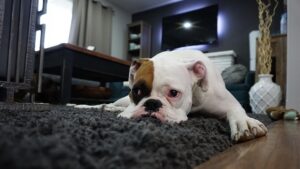
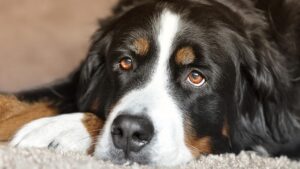
- Lion’s pose: head resting on front paws. It lets a dog spring into action quickly. A head-raised variant can also ease breathing, worth noting in brachycephalic breeds like bulldogs.
Dogs also switch which direction they curl from nap to nap. A study of shelter dogs found no consistent left-or-right preference, with dogs changing curl direction in most rest bouts observed. So favoring one direction one night and the other the next is entirely normal.
Dog Sleeping Positions Meaning: What Does Each Position Show?
- Side sleeper: relaxation, feels safe
- Donut curl: conserving warmth, mild insecurity
- Superman pose: light rest, ready to play
- Belly-up: high trust, cooling down
- Lion’s pose: light, alert rest
- Cuddled / back-to-back: bonding, warmth-seeking
Dogs sleeping close to their owner aren’t just seeking warmth. Polysomnography research found dogs reached deeper sleep faster with their owner nearby. Maven’s dog sleep tracker can help you see this kind of pattern over time.
“I got the Maven sensor for my 14-year-old Chihuahua mix with heart and trachea issues. It gave me back peace of mind – I can track her RRR, BPM, drinking, and activity anytime and know instantly if something’s wrong. Highly recommend!”
★★★★★
Chiara De Luca
Titti
How Do Puppies, Adult Dogs and Senior Dogs Sleep Differently?
Puppies sleep the most of any life stage and often shift between positions within a single nap, as their sleep cycles are still developing.
Adult dogs settle into more predictable patterns, favoring side sleeping or curling depending on temperature.
Senior dogs may shift toward positions that ease joint pressure, such as side sleeping, and curl less if arthritis makes it uncomfortable. Changes in their usual position are worth watching.
Dog Sleeping Positions When Sick: What Do They Look Like?

A dog that’s unwell may hold a normal-looking position, with other signs layered on top:
- Rigid, tense curling rather than a loose donut shape, with reluctance to uncurl
- Avoiding a normally-favored side, which can point to joint or abdominal discomfort
- Sudden stomach sleeping, sometimes linked to anxiety
- Labored breathing, snoring or panting during rest. It’s always worth a vet call
- Restlessness before settling, such as pacing, which can indicate pain
Sleeping positions are rarely diagnostic alone. What matters is an unusual position combined with other signs.
When Should a Change in Sleeping Position Be a Concern?
A single unusual nap isn’t something to worry about. What’s worth watching for is an abnormal pattern – a lifelong side sleeper suddenly curling tightly every night, for example, alongside other signs of discomfort.
Consider reaching out to your vet if a change comes with:
- Reduced activity or reluctance to move after resting
- Increased resting respiratory rate or labored breathing
- Signs of pain, such as whimpering, limping or odd behavior
- Noticeable scratching disrupting rest
- A broader shift in sleep duration
Because dogs can’t tell us when something feels off, changes in rest behavior are often among the earliest clues worth a closer look.
“Most sleeping positions simply reflect comfort and individual preference. The more important observation is whether your dog’s normal sleeping habits or preferred positions change suddenly, especially if those changes occur alongside reduced activity or other signs of illness.” – Joana Babo, DVM, Veterinarian at Maven Pet
How Maven Helps
The Maven pet health tracker is built for exactly this kind of long-term monitoring. Its dog sleep tracker monitors rest continuously, establishing each dog’s typical sleep duration, and its dog activity tracker flags whether a changed position comes with reduced movement or lethargy.
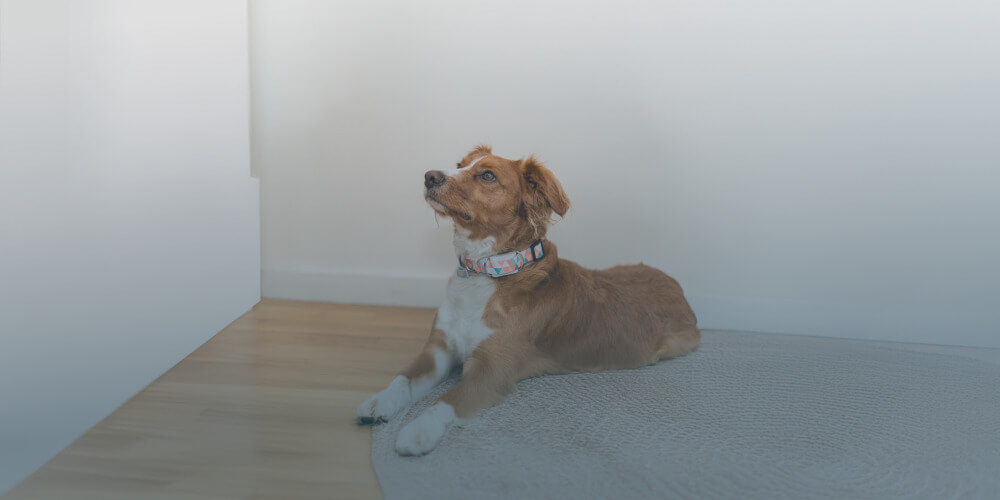
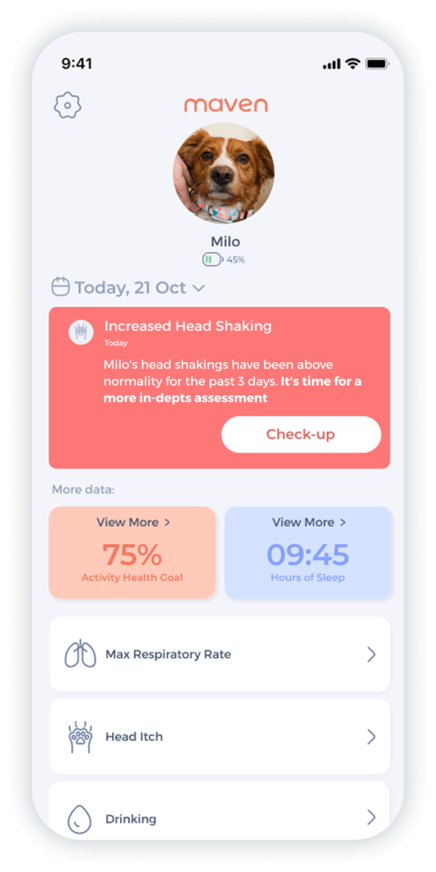
Monitor heart rate, respiratory rate, activity & rest, drinking, itch behavior.
The Maven pet health app combined with a dog health tracker also tracks:
- Heart rate trends and resting respiratory rate, which may shift before symptoms appear
- Head shaking and drinking behaviors that can point to discomfort disrupting sleep
- A personalized baseline for each dog, with alerts when deviations occur
While Maven can’t identify a specific sleeping position, this monitoring helps tell whether a change is a new preference or part of a broader shift worth discussing with a vet.
FAQ
Most reflect comfort, temperature or trust. Curling conserves warmth, side sleeping shows relaxation, belly-up shows trust.
Side sleeping with legs extended is generally the most relaxed position, allowing for deep, restorative rest.
They can. Sick dogs may curl more rigidly, avoid a favored side, or shift to sudden stomach sleeping, often with restlessness or labored breathing.
A single different nap isn’t alarming, but a consistent change, especially with reduced activity or other odd signs, is worth mentioning to your vet.
Sometimes. Tense curling, avoiding pressure on one side, or restlessness before settling can suggest discomfort, particularly in senior dogs.
Conclusion
Your dog’s sleeping position is rarely a mystery worth losing sleep over. Most of the time, it’s their way of staying warm, cool, comfortable or close to you. The real value is knowing what’s normal for your dog, so when something changes, you notice. Paired with monitoring of rest and activity, understanding sleep habits is one more way to stay ahead of their wellbeing.
Maven Pet focuses on improving the quality of life of our pets with technology, using artificial intelligence (AI) to enable proactive pet care. By accurately collecting and monitoring pet data 24/7 and flagging any irregularities, Maven Pet empowers pet parents and veterinarians to stay ahead of potential health issues, ensuring the well-being and longevity of our beloved companions.